Locating and uncovering the tank
We find the tank and access lids or risers. On older Central Oregon properties the lids are sometimes buried, so part of the visit is confirming access for this and future service.
Septic tank pumping service in Bend and Central Oregon. Learn the warning signs, what pumping involves, and how local soils change the schedule.
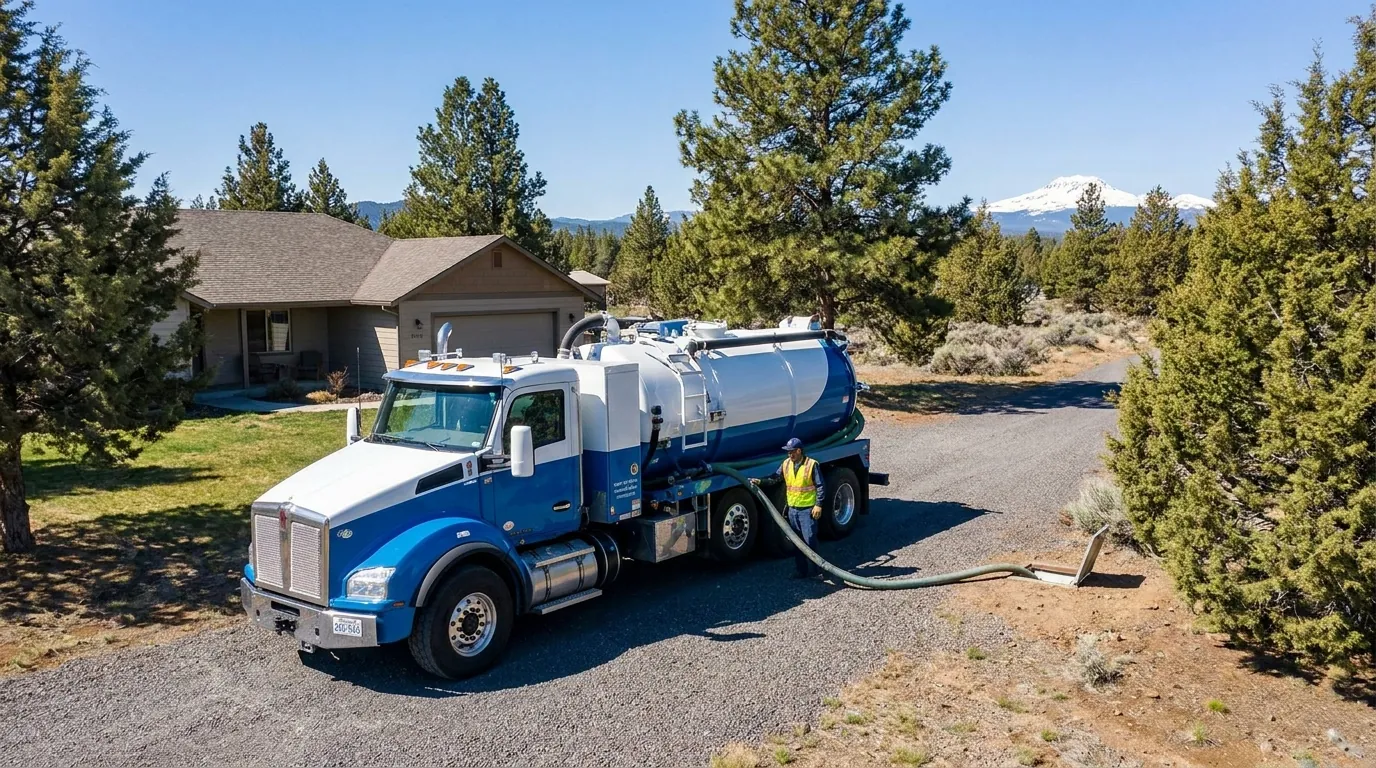
Every septic tank collects solids that settle to the bottom as sludge and grease that floats to the top as scum. Between those two layers sits the liquid that flows out to your drain field. Pumping removes the sludge and scum before they build up far enough to escape the tank and clog the soil that treats your wastewater. When that happens, the repair is no longer a routine pump-out — it can mean a failed drain field and a bill many times higher.
In and around Bend, the timing of that maintenance is not one-size-fits-all. Homes on the wetter, west side toward the Cascades sit over different soils than properties on the dry volcanic ground east toward Redmond and Crooked River Ranch. Water-table depth, how fast the surrounding soil drains, and how many people live in the house all change how quickly your tank fills. Our septic tank pumping service is built around those local realities rather than a generic calendar.
A straightforward pump-out with a look at the parts that predict future problems.
We find the tank and access lids or risers. On older Central Oregon properties the lids are sometimes buried, so part of the visit is confirming access for this and future service.
A vacuum truck removes the floating scum and the settled sludge, not just the liquid in the middle. Pumping only the liquid leaves the damaging solids behind.
With the tank empty we can check baffles, the inlet and outlet, and signs of backflow from the drain field that hint at a larger issue.
We record sludge levels and tank condition so you have a realistic interval for the next pump-out instead of guessing.
Central Oregon's split climate matters more than most homeowners expect. West of Bend and up toward Black Butte Ranch, wetter winters raise the seasonal water table and slow how fast a drain field can accept effluent — which means a tank that is even slightly overloaded shows problems sooner. On the drier east side, fast-draining volcanic soils are more forgiving day to day, but shallow lava rock and thin soil can limit how much treatment area a property has.
Because of this, two homes with the same size tank and the same number of people can need pumping on different schedules. If you are not sure where yours falls, a septic system inspection establishes a baseline. When we open the tank and find heavy grease or a crusted scum layer, we may also recommend a full septic tank cleaning rather than a standard pump-out.
For guidance on timing, our article on how often to pump a septic tank in Bend walks through the factors that set your interval.
Tell us your location, tank size if you know it, and when it was last pumped. We serve Bend and the surrounding communities.
Call to schedule septic tank pumping in Bend and Central Oregon.
Cost depends on tank size, how full it is, access to the lids, and how far the truck has to travel. A standard residential pump-out is a routine job, while a badly overfull tank or buried lids add time. See our article on septic tank pumping cost in Bend for the factors that move the price.
Slow drains throughout the house, gurgling fixtures, odor near the tank, or soggy ground over the drain field are all warning signs. Even without symptoms, most tanks need pumping every few years based on household size and tank capacity.
We remove the settled sludge and floating scum, not only the middle liquid. Pumping just the liquid leaves the damaging solids behind and shortens the life of your drain field.
Yes. Frozen or snow-covered ground and buried lids can make access harder in the colder months, so telling us where the tank sits helps us come prepared.