Evaluating the symptoms
We look at the ground over the field, drainage behavior in the house, and the tank's condition to separate a field problem from a tank problem.
Drain field service in Bend, OR. Spot a failing leach field early and learn how Central Oregon soils and winter water tables affect the fix.
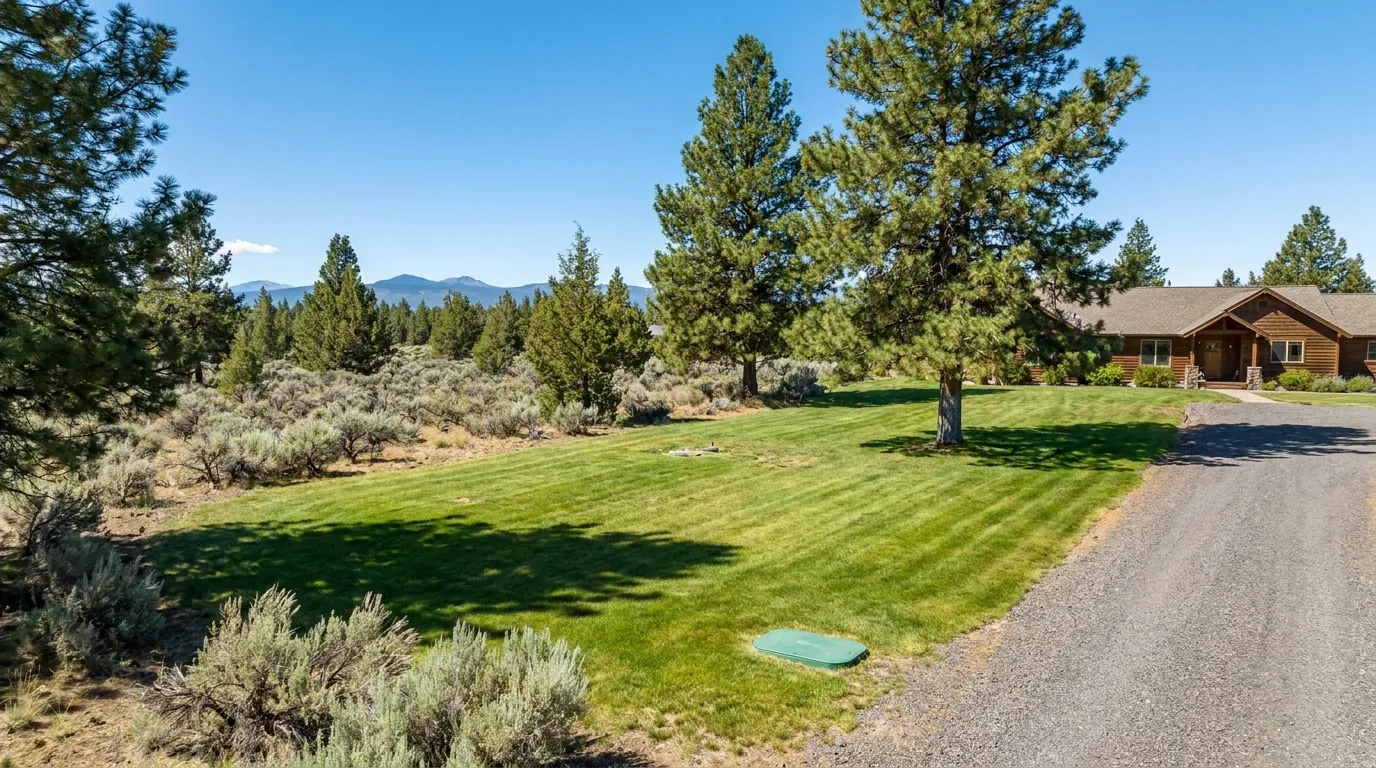
Your tank separates solids from liquid, but the drain field — also called the leach field — is where the liquid soaks into the soil and gets treated by the ground itself. It is the most expensive part of the system to replace and the part most people never think about until it fails. When a field starts to go, the warning signs are hard to miss: soggy or unusually green grass over the field, standing water, sewage odor outdoors, and slow drains that persist even after the tank is pumped.
A field usually fails for one of two reasons. Either solids escaped the tank and clogged the soil, or the field is being overloaded with more water than the surrounding ground can absorb. In Central Oregon both causes are shaped by the local ground and climate, which is why a fix that works east of Bend may not be right for a wetter property toward the Cascades.
Diagnosis first, because the right response depends on why the field is struggling.
We look at the ground over the field, drainage behavior in the house, and the tank's condition to separate a field problem from a tank problem.
Often the fastest win is a pump-out. A neglected tank sends solids into the field, and clearing it may relieve the symptoms.
Where a field is overloaded, we advise on water use, redirected surface runoff, and other steps that give the soil a chance to recover.
When a field is genuinely failing, we explain your options plainly so you can plan rather than react to an emergency.
Drain field performance in this region is dominated by two things: how fast the local soil drains and how high the water table climbs in winter. West of Bend and up toward Black Butte Ranch, wet winters raise the seasonal water table, and a field that handles summer flow easily can saturate and back up in the rainy months. On the drier volcanic ground toward Redmond and Crooked River Ranch, soils drain fast, but shallow lava rock can leave a field with less usable treatment depth than it appears to have.
Because of that seasonality, protecting the field is mostly about keeping solids out and water reasonable. Routine septic tank pumping is the single best defense, and a septic system inspection can catch a struggling field before it fails outright. If you want to understand how winter weather stresses these systems, read our article on septic care during heavy rain in Bend.
Describe what you're seeing — wet ground, odor, slow drains — and where the property is. Early attention protects the most costly part of your system.
Drain field service throughout Bend and Central Oregon.
Soggy or unusually green grass over the field, standing water, outdoor sewage odor, and slow drains that continue after the tank is pumped. These point to the field rather than the tank.
It depends on the cause. A field overloaded by a neglected tank or too much water can sometimes recover once the tank is pumped and the load is reduced. A field clogged beyond that point needs more significant work.
Wetter winters west of Bend raise the seasonal water table, leaving the soil less room to absorb effluent. A field that works all summer can saturate and back up during the rainy months.
Pump the tank on schedule so solids never reach the field, keep water use reasonable, and direct roof and surface runoff away from the field area. These habits extend its life significantly.