Septic System Inspection in Bend, OR
Septic system inspection in Bend, OR. Catch tank, baffle, and drain field problems early, and get a clear picture before a home sale or repair.
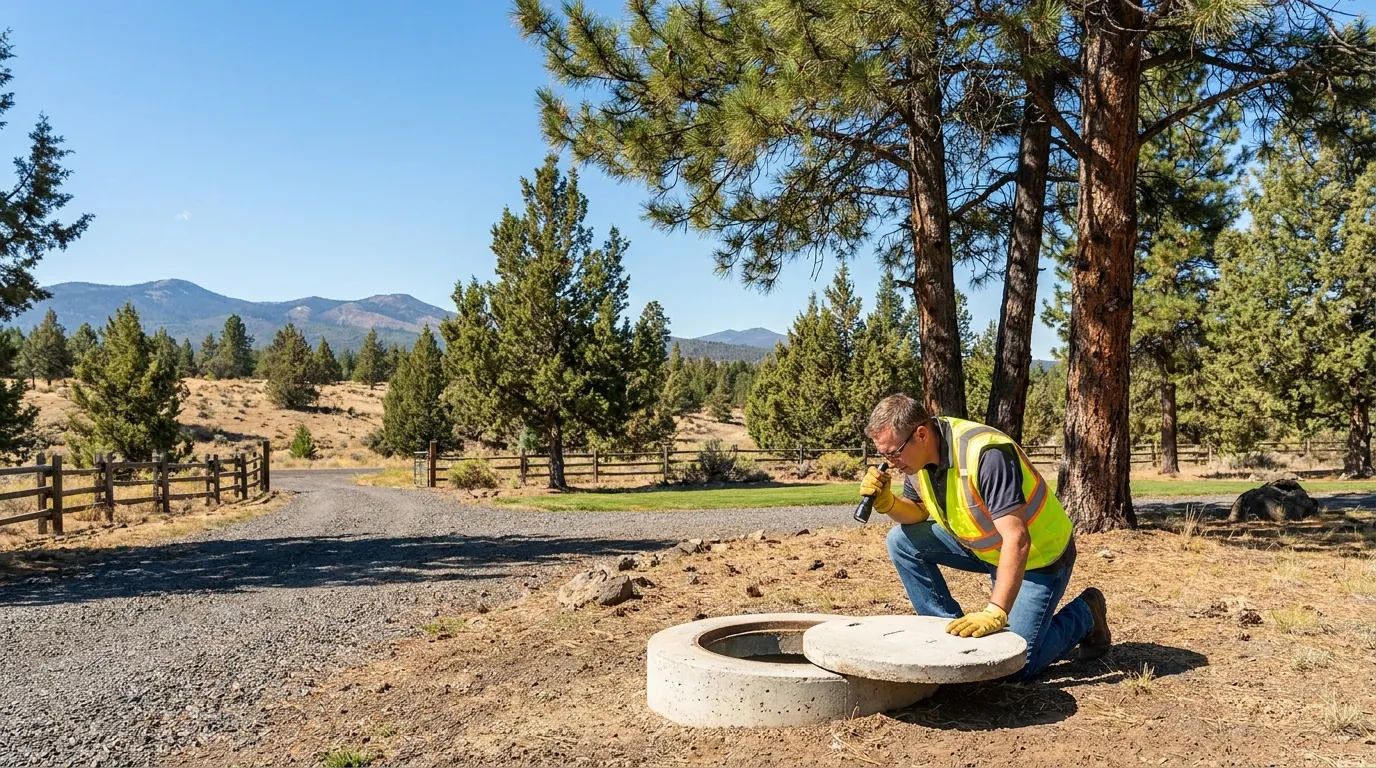
What an inspection tells you
A septic system is mostly underground, which is exactly why problems go unnoticed until they surface as a backup or a wet spot in the yard. An inspection brings the hidden parts into view: how much sludge and scum have built up, whether the inlet and outlet baffles are intact, and whether effluent is moving out to the drain field the way it should. It is the difference between guessing about your system and knowing.
People in Central Oregon usually ask for an inspection for one of three reasons: they are buying or selling a home and need to know the condition, they have noticed warning signs and want a diagnosis before spending on septic system repair, or they simply want a baseline so they can pump on a sensible schedule. Whichever applies to you, the goal is the same — an honest assessment of what is working and what needs attention.
How the inspection works
A methodical check from the tank out to the drain field.
-
Locate and open access points
We find the tank and lids or risers, which on older Bend-area properties can be buried or hard to reach, and confirm safe access.
-
Measure sludge and scum
We gauge how full the tank is. Heavy buildup close to the outlet is a red flag that solids are about to reach the drain field.
-
Check baffles and structure
Cracked or missing baffles let solids pass through, and a deteriorating tank or lid is a safety and function problem. We note both.
-
Assess the drain field
We look for standing water, odor, and lush or soggy ground over the field — signs the soil is no longer accepting effluent well.
-
Report and next steps
You get a plain-language summary of the condition and whether the fix is routine maintenance or a repair.
Local soils and why they matter to a repair
Whether a symptom points to a simple fix or a failing drain field depends heavily on the ground under your property. West of Bend toward Black Butte Ranch, wetter winters and a higher seasonal water table can overwhelm a drain field that would work fine in summer, so timing the inspection matters. On the drier volcanic soils toward Redmond and Crooked River Ranch, shallow lava rock can limit treatment area, so a system there has less margin when the tank is neglected.
If an inspection turns up heavy solids, the right next move is often septic tank pumping before any diagnosis of the drain field, since an overfull tank can mask or cause field symptoms. When the field itself is struggling, our drain field service addresses that directly. Reading the signs early is the whole point — our guide to signs your septic tank is full in Bend can help you decide when to call.
Schedule a septic system inspection
Tell us why you need the inspection — a home sale, a symptom, or a baseline — and where the property is located.
Serving Bend and nearby Central Oregon communities.
Frequently asked questions
When should I get a septic inspection?
Before buying or selling a home, when you notice slow drains or odors, or every few years as a baseline. Catching a cracked baffle or an overloaded tank early is far cheaper than a septic system repair after a failure.
Does an inspection include pumping?
An inspection and a pump-out are separate, though we often recommend pumping when the tank is full so we can see the baffles and tank walls clearly. We will tell you if pumping is needed to complete the assessment.
Can an inspection tell me if my drain field is failing?
It can identify strong warning signs — standing water, odor, and soggy ground over the field — and whether solids have reached it. Some field problems take further evaluation, but the inspection tells you whether that step is warranted.
Do I need an inspection to sell my home?
Buyers and lenders often want confirmation that the septic system works, especially on rural Central Oregon properties. An inspection gives both sides a clear, current picture of the system's condition.