Septic Emergency Service in Bend, OR
Septic emergency service in Bend, OR. What to do when your septic backs up, why it happens, and how fast response limits the damage.
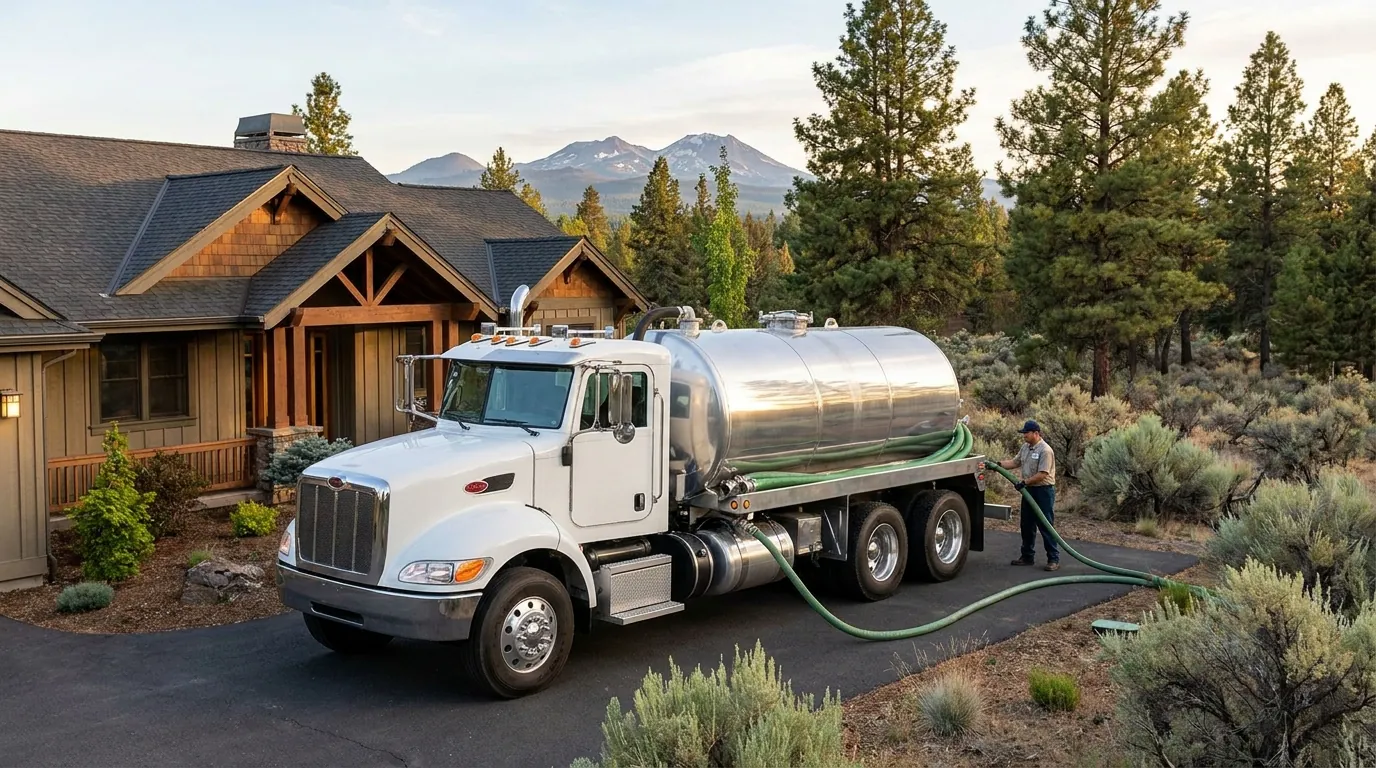
When a septic problem becomes an emergency
Some septic problems can wait for a scheduled visit; others cannot. Sewage backing up into a tub or floor drain, wastewater surfacing in the yard, or every drain in the house refusing to clear all point to a system that has stopped moving water. At that point the priority is stopping the flow into the house and getting the cause diagnosed before the mess and the damage grow.
The most common trigger is a tank that has filled to the point where solids block the outlet, so the first step is usually pumping it down and finding out why it reached that state. Sometimes the tank is only part of the story — a saturated drain field or a blocked line can produce the same symptoms. Fast, clear-headed response matters more than anything, because standing sewage is both a health hazard and a source of costly damage.
What to do while help is on the way
A few steps limit the damage before service arrives.
-
Stop adding water
Turn off dishwashers and washing machines and keep water use to a minimum. Every gallon you send down makes a backup worse.
-
Keep people and pets away
Treat any surfaced sewage as a health hazard. Keep the area clear and avoid contact.
-
Note what you're seeing
Which drains are affected, whether the yard is wet, and when the tank was last pumped all help us diagnose the cause quickly.
-
Locate your tank if you can
Knowing where the tank and lids are lets us get to work faster when we arrive.
Why Central Oregon systems back up
Many emergencies trace back to a schedule that slipped. When solids build past the outlet, the tank stops working and the house backs up — which is why routine septic tank pumping prevents most of these calls. Others are seasonal: during Central Oregon's wet winters, a high water table west of Bend can saturate a drain field until it can no longer accept effluent, and a system that ran fine all summer suddenly overflows.
Once the immediate problem is under control, the next step is finding out whether it was the tank, the field, or a blocked line. A septic system inspection identifies the root cause so the same emergency doesn't repeat. For homeowners who want to prevent winter backups, our guide to septic care during heavy rain in Bend covers the seasonal steps that matter most.
Dealing with a septic backup?
Call and describe what's happening — which drains are affected and whether sewage has surfaced. Fast response limits the damage.
Septic emergency response for Bend and surrounding Central Oregon communities.
Frequently asked questions
What counts as a septic emergency?
Sewage backing up into the house, wastewater surfacing in the yard, or every drain refusing to clear at once. These mean the system has stopped moving water and need prompt attention to limit damage and health risk.
What should I do first when my septic backs up?
Stop using water immediately — turn off appliances and minimize flushing — and keep people and pets away from any surfaced sewage. Then note which drains are affected and when the tank was last pumped so the cause can be found quickly.
Will pumping fix the emergency?
Often pumping the tank relieves the immediate backup, but it doesn't always address the underlying cause. If a saturated drain field or a blocked line is involved, an inspection is needed to prevent a repeat.
Why do backups happen in winter here?
Wet winters west of Bend raise the seasonal water table, which can saturate a drain field so it no longer absorbs effluent. A system that worked all summer can back up during the rainy months as a result.