Full pump-out
We remove the accumulated grease, food solids, and water from the trap so it starts fresh with full separation capacity.
Grease trap pumping in Bend, OR for restaurants and commercial kitchens. What it involves, how often to schedule, and why it protects your system.
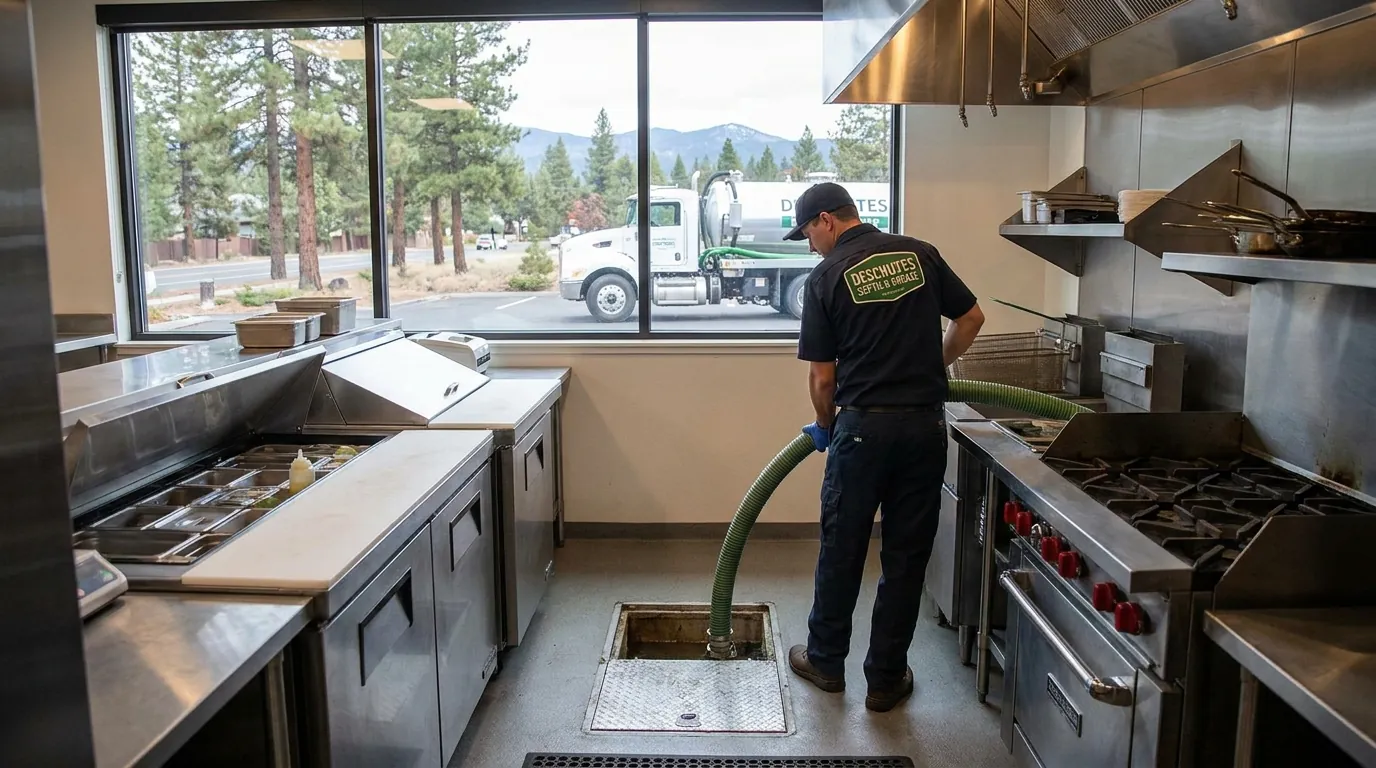
A grease trap intercepts fats, oils, and grease from a commercial kitchen before they enter your plumbing. Left in the wastewater, that grease cools, hardens, and coats pipe walls until lines slow and eventually block. For a food business, a backed-up kitchen line is not just a mess — it stops service. Regular grease trap pumping keeps the trap working the way it was designed to, catching grease so it never reaches the lines beyond it.
In Bend and the surrounding communities, many restaurants, lodges, and food operations — including seasonal spots near Sunriver and Black Butte Ranch — run on septic systems rather than city sewer. On those properties a neglected grease trap is especially costly, because grease that gets past it flows straight to a tank and drain field that were never built to handle it.
A thorough pump-out and a look at whether your schedule is keeping up with your volume.
We remove the accumulated grease, food solids, and water from the trap so it starts fresh with full separation capacity.
We scrape and clean the trap walls and check baffles and screens so the trap captures grease efficiently again.
How fast a trap fills depends on your menu and volume. We help you set an interval that avoids both blockages and unnecessary visits.
Consistent service records help you keep the kitchen running and demonstrate that the trap is maintained.
For a commercial kitchen on a septic system, the grease trap is the front line protecting everything downstream. If it overflows into the septic tank, grease builds a heavy scum layer fast, and the tank needs a full septic tank cleaning far sooner than it otherwise would. Worse, grease that reaches the drain field can clog the soil and shorten the life of the most expensive part of the system.
That is why grease trap pumping and regular septic tank pumping work together on food-service properties in Central Oregon. Keeping the trap on a sensible schedule protects the tank, and keeping the tank pumped protects the field. If a line does back up during service hours, our septic emergency service can respond.
Tell us your trap size, your kitchen's volume, and when it was last pumped, and we'll help set a schedule that keeps your lines clear.
Grease trap pumping for food businesses in Bend and Central Oregon.
It depends on your kitchen's volume and menu, but many traps need service on a regular monthly or quarterly cycle. If lines slow or the trap smells, it is overdue. We help set an interval that matches your operation.
Grease escapes the trap, hardens in the lines, and eventually blocks them, which can shut down the kitchen. On a septic property, that grease also overloads the tank and can damage the drain field.
Pumping is straightforward and can often be scheduled around your busiest hours. Telling us your trap location and access helps us work efficiently and stay out of your way.
Yes. On a septic system a neglected grease trap sends grease straight to the tank and drain field, causing expensive downstream problems. Regular trap service is even more important in that setup.