Complete removal of solids
We pump the liquid, then work the settled sludge and crusted scum loose so the tank is emptied of all layers, not just the middle.
Septic tank cleaning in Bend, OR. The difference between pumping and a full cleaning, what it involves, and when Central Oregon systems need it.
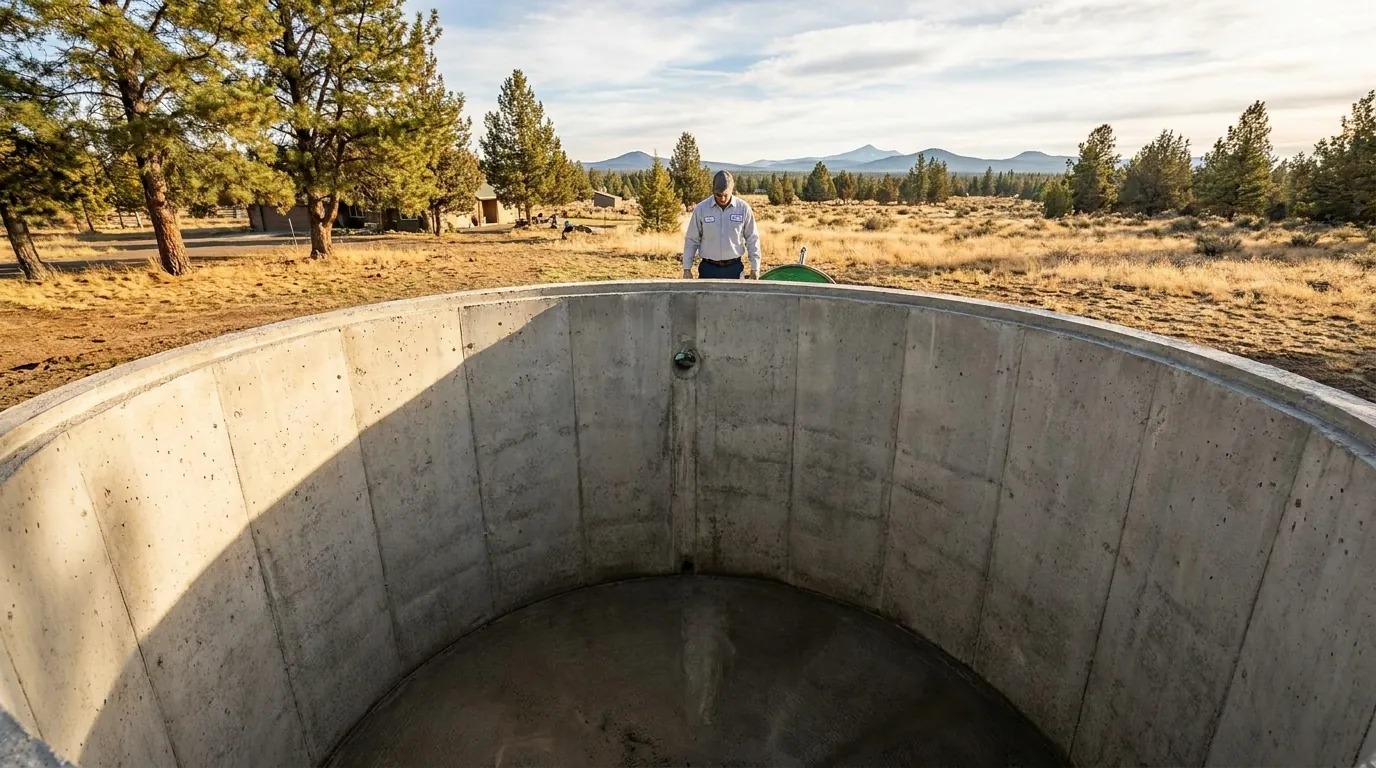
People use the terms interchangeably, but cleaning a septic tank means more than pumping it. A standard pump-out removes the liquid and the loose solids. Cleaning the septic tank goes further — breaking up and removing the compacted sludge at the bottom and the hardened scum layer at the top that a quick pump leaves behind. Over time those layers cement in place, and if they are not removed the usable volume of your tank keeps shrinking even after each pump-out.
Cleaning a septic tank is the right call when a tank has gone many years without service, when heavy kitchen grease has built a thick crust, or when an inspection shows solids stacked close to the outlet. In Central Oregon, homes that see seasonal use — cabins near Sunriver or Black Butte Ranch, for example — can develop unusually firm layers because the tank sits idle for long stretches, and those benefit from a full cleaning rather than a light pump.
Removing every layer so the tank works at its designed capacity again.
We pump the liquid, then work the settled sludge and crusted scum loose so the tank is emptied of all layers, not just the middle.
The tank walls and floor are rinsed to clear residue, which also lets us see the true condition of the concrete and baffles.
With the tank clean we confirm the inlet and outlet baffles are intact so solids stay out of the drain field.
We flag habits that create heavy scum — grease down the drain, garbage disposals, harsh cleaners — so buildup returns more slowly.
Local water and use patterns shape how fast a tank needs a deep clean. Hard water and heavy seasonal cooking build scum faster; vacation homes that swing between full occupancy and months of vacancy tend to form firmer layers. On the drier east side toward Redmond, fast-draining soils forgive a lot at the drain field, but a neglected tank still sends solids downstream and can quietly ruin a field.
If your tank is only moderately full, a routine septic tank pumping may be all you need — cleaning is the step up when buildup is severe. Not sure which applies? A septic system inspection measures the layers and settles the question before you spend on the deeper service.
Tell us when the tank was last serviced and whether you've noticed slow drains or odor. We serve Bend and the surrounding area.
Septic tank cleaning services across Central Oregon.
Pumping removes the liquid and loose solids from the tank. Cleaning a septic tank also removes the compacted sludge and hardened scum that a quick pump leaves behind, restoring the tank's full working volume.
Tanks that have gone many years without service, have heavy grease buildup, or show solids near the outlet during an inspection usually need cleaning rather than a routine pump. Seasonal-use properties are common candidates.
No. Rinsing and removing built-up layers is normal maintenance and lets us inspect the concrete and baffles. In fact, leaving hardened layers in place is what shortens a tank's usable life.
Keep grease, harsh chemicals, and non-flushable items out of the system, avoid overloading it with water in a short span, and pump on a sensible schedule. These habits keep the scum and sludge layers from cementing in place.